

iPhone 18 Series: Every Major Leak, Rumour and Expected Upgrade Ahead of Apple’s September 2026 Event
Apple has scheduled a September 9, 2026 event. Current reporting points to the iPhone 18 Pro and Pro Max, plus Apple’s long-rumoured first foldable iPhone, while the standard iPhone 18 is widely expected to move to 2027.


What is actually confirmed?
The most important confirmed development is the event itself. Apple has announced a September 9 special event at Apple Park. Reuters and The Verge report that the event is expected to introduce the next iPhone generation and could include Apple’s first foldable phone. It is also expected to be the first major Apple launch under incoming CEO John Ternus.
That does not make every specification online official. Apple’s public iPhone pages still describe the iPhone 17 generation, and Apple has not published a final iPhone 18 specification sheet. Rumour stories mix supply-chain reports, dummy-unit photography, analyst forecasts and concept renders, so readers need to know which evidence is strongest.
The unusual 2026 launch strategy
The 2026 iPhone cycle may be different from the familiar September pattern. Multiple reports expect the premium iPhone 18 Pro and Pro Max to arrive in September while the standard iPhone 18 moves to spring 2027. MacRumors currently lists the Pro and Pro Max for September and the standard model for 2027; The Verge reports a similar staggered strategy.
Strategically, this gives Apple two major product moments. September can concentrate attention on high-margin premium hardware and the foldable category, while a later standard iPhone can refresh demand again. It also changes how consumers should interpret the word “iPhone 18”: the whole family may not appear at the same time.
iPhone 18 Pro and Pro Max: what the dummy units tell us
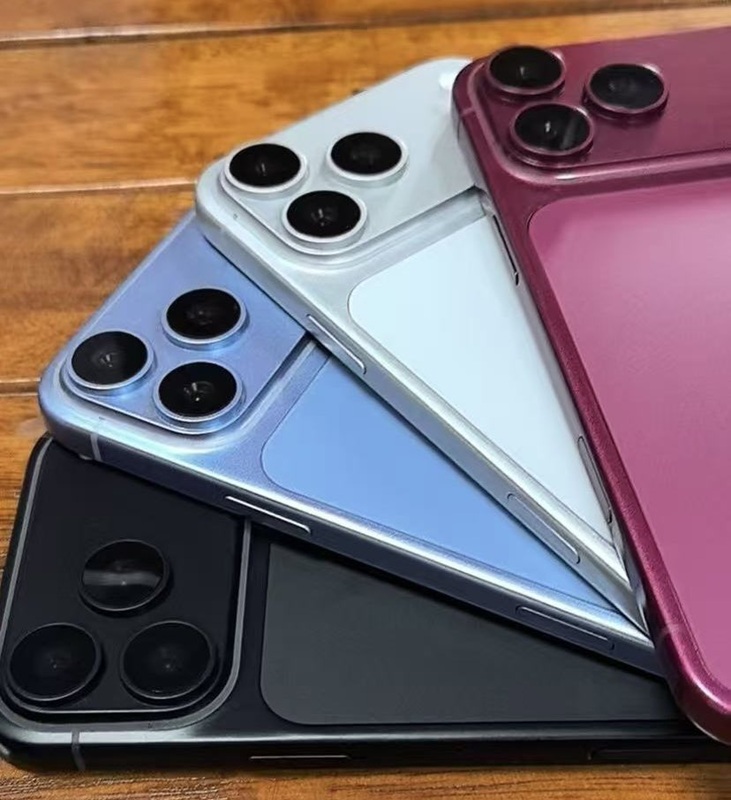
Leaked dummy units attributed to Sonny Dickson and reported by MacRumors and 9to5Mac suggest the Pro models will retain much of the iPhone 17 Pro silhouette. That is useful evidence against some of the more dramatic redesign rumours. Dummy units are commonly made so accessory manufacturers can build cases before launch, which means dimensions and button/camera placement can be meaningful clues.
Colour is one of the clearest recurring rumours. Reported dummy units show Light Blue, Dark Cherry, Dark Gray/Black and Silver. Dark Cherry is the headline finish and has appeared repeatedly in reporting during 2026. The exact retail colour can still change, so these should be treated as indications rather than final Apple marketing colours.
A smaller Dynamic Island and the Face ID question
One of the most interesting design rumours is a smaller Dynamic Island. The potential significance is that some Face ID hardware may move under the display, reducing the visible area required for sensors. MacRumors currently describes leaked-prototype imagery that appears to show a smaller cutout, while other reporting remains cautious about how much of Face ID could actually move beneath the panel.
There are two separate claims here. “The cutout gets smaller” is one claim. “Face ID becomes fully under-display” is another, much stronger claim. The first can be supported by physical clues; the second requires internal hardware evidence or Apple’s own announcement.
A20 Pro and 2nm: the upgrade that could matter more than the design
Current reports expect the Pro models to use an A20 Pro chip built on a 2nm process. If accurate, the important story is efficiency as much as speed. Smaller semiconductor processes can allow greater transistor density and give chip designers more room to balance performance, power and thermal behaviour.
That matters because the iPhone is becoming an AI computer. Apple’s June 2026 Apple Intelligence announcement describes new Apple Foundation Models and a privacy-oriented architecture spanning iPhone, iPad, Mac, Watch, AirPods and Vision Pro. A more efficient processor can therefore affect local AI inference, image generation, speech processing, photo editing, camera pipelines and future assistant features.
Camera: variable aperture is the rumour worth watching
Several reports point to a variable-aperture main camera, potentially with differences between the Pro and Pro Max. A variable aperture physically changes how much light reaches the sensor. In bright scenes it can help control exposure; in low light it can allow more light through. It can also give photographers another optical tool for depth-of-field effects.
The bigger opportunity is computational photography. Apple could combine optical aperture control with its image signal processor and machine-learning models to produce different results in portraits, night scenes and video. But this remains a rumour. A component appearing in a prototype or supply-chain report does not guarantee that Apple will ship it.
Battery, thickness and thermal engineering
Reports also suggest that the Pro models could become slightly thicker. That is not necessarily bad engineering. More internal volume can support a larger battery, more camera hardware, improved cooling or stronger structural components. Modern flagship phones are constrained by thermal density: powerful chips, cameras and radios all generate heat inside a very small enclosure.
The practical question for buyers should therefore be battery life and sustained performance, not whether the phone is 0.x millimetres thicker. If Apple trades a small amount of thinness for a meaningful battery or thermal improvement, many users may consider that a good trade.
Apple’s next modem: why the C2 rumours matter
Another recurring report is a new Apple-designed modem, commonly referred to as C2 in leak coverage. Apple has been working toward greater control over modem technology. A successful modem platform could improve power efficiency and integration with Apple silicon and software.
A modem affects much more than download speed. It influences standby battery use, carrier compatibility, radio performance, network handover and behaviour in weak-signal environments. If Apple can integrate modem and application-processor decisions more tightly, improvements may show up as reliability and battery gains rather than a dramatic speed-test headline.
The foldable iPhone: the real wildcard
The biggest potential change is not the Pro chassis at all. It is the expected foldable iPhone, sometimes called the iPhone Ultra in leak coverage. Multiple reports describe a book-style design that closes like a phone and opens into a much larger display.
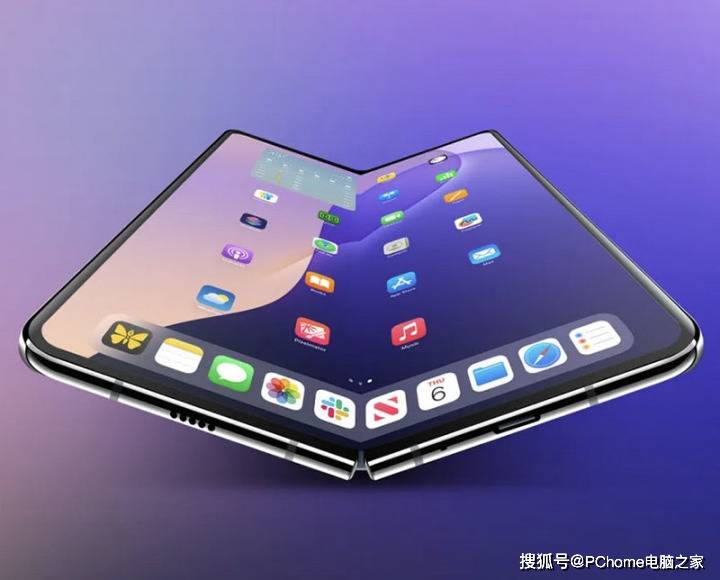
Reported screen sizes vary, but several sources put the internal display around 7.8 inches and the cover display around 5.5 inches. Those numbers are not confirmed by Apple. What is more interesting is the product strategy: a foldable iPhone would let Apple compete in a premium category currently led by Samsung and other Android manufacturers.
A foldable also creates engineering problems that a normal iPhone does not have. The hinge must survive thousands of cycles. The display must tolerate repeated bending. The software needs to move naturally between closed and open states. Cameras must work in two physical configurations. Battery capacity has to be spread across separate sections of the chassis. Dust, water resistance and repairability become harder questions.
Rumoured specification confidence table
| Rumour | Confidence | Why it matters |
|---|---|---|
| September 9 event | Confirmed | The launch window is official. |
| iPhone 18 Pro / Pro Max | Strongly reported | Multiple outlets expect premium models in September. |
| Dark Cherry / Light Blue / Black / Silver | Corroborated | Dummy-unit images have surfaced. |
| Smaller Dynamic Island | Reported | Prototype/dummy reporting points to a smaller cutout. |
| 2nm A20 Pro | Reported | Multiple outlets cite the next-generation chip. |
| Variable aperture camera | Reported but uncertain | Could be a major photography improvement. |
| Under-display Face ID | Rumoured | Could explain a smaller display cutout. |
| C2 modem | Rumoured/reported | Would continue Apple’s modem strategy. |
| Foldable iPhone Ultra | Strongly reported, final specs uncertain | Multiple reports expect Apple’s first foldable. |
| Final price | Unknown | Apple has not announced pricing. |
How to judge the leaked images
Not every “leak image” is equal. Dummy units are relatively useful for physical dimensions because accessory manufacturers need them. CAD renders can be useful if they originate from a credible manufacturing source. Concept renders are useful for visualising a rumour but prove nothing about Apple’s final design.
AI-generated images add another problem. A convincing render can now be produced in seconds, and social media posts often remove the original context. Before republishing a leak, look for the original source, date, photographer or leaker, and whether the publisher explicitly calls it a dummy, CAD file, concept or alleged prototype.
What it could mean for buyers
For an iPhone 17 Pro owner, the iPhone 18 Pro may be an incremental rather than transformational upgrade. The most meaningful reasons to upgrade would likely be a combination of processor efficiency, camera flexibility, battery life, modem improvements and a cleaner display area. If Apple delivers all of those together, the cumulative difference could be substantial even if the phone looks familiar.
For owners of older generations, the story is different. Improvements accumulated over several years in display quality, cameras, AI processing, connectivity and battery management can make a newer Pro model feel dramatically more capable.
The foldable model is a different proposition. Its main selling point is not benchmark performance; it is the ability to carry a larger screen in a smaller closed footprint. Buyers will need to decide whether that flexibility justifies the likely premium and the additional mechanical complexity.
What we expect Apple to answer on September 9
The event should settle the biggest unknowns: official product names, pricing, availability, chip specifications, cameras, colours, display details and the exact status of the foldable model. It will also tell us which rumours were genuine signals and which were simply internet noise.
AussieTechShop verdict
The iPhone 18 story is bigger than another annual camera-and-chip refresh. It sits at the intersection of several major technology trends: smaller semiconductor processes, local AI, custom connectivity silicon, computational photography and foldable displays.
The Pro models increasingly look like an evolution focused on efficiency and capability. The foldable iPhone, if Apple launches it, is the strategic experiment that could matter most. It would give Apple an entirely new premium category, but it would also introduce hinge, display, software and pricing challenges.
Our rule for readers: until Apple announces the product, treat specifications as rumours. We will update this article after the event and mark each major prediction as accurate, partly accurate or wrong.
Sources and further reading
- Reuters — Apple sets September 9, 2026 iPhone launch event
- The Verge — Apple September 2026 event and expected lineup
- MacRumors — iPhone 18 Pro: Everything We Know
- MacRumors — iPhone 18 Pro colour dummy models
- 9to5Mac — iPhone 18 Pro dummy-unit gallery
- Tom's Guide — iPhone 18 Pro rumours
- Apple — Apple Intelligence